阿里巴巴
类器官加速迈向临床应用,国内外专家共议标准化与可信证据体系建设_我的网站

一 |
Hiding in plain sight
Just before the new law came into effect, Mona Lisa, a 29-year-old trans woman, had her home raided by Ugandan authorities. She was jailed for three months on charges of "homosexuality propaganda."Her apartment is the only place where she feels safe to be her true self. She pulls out a small suitcase from on top of a shelf. Inside, her prized outfits are stashed away in secret.Donning a bright blue and yellow-patterned wrap and matching pants, a dark brown bob, and red lipstick, Mona Lisa says, "I feel perfect. I feel like this is the Mona I want to be like on a daily basis."While there was a time when it was safer to be her true self in public, she says, "It's not happening now."Meanwhile, 27-year-old Eric was also arrested earlier this year. Inside his home, the young activist wears a striped rainbow shirt and his home is filled with color. His full name and location are being withheld for safety reasons.But it's not safe to go out like this, Eric says.For Eric and his friends, just existing is a form of defiance. On this night, going out to a club is their act of resistance."You can't go alone out -- in case something happens. You can't just go alone," Eric said.Gay clubs in Uganda have been shut down, so the group of friends head to a local dance party instead. It's not illegal to have a good time, but those who are gay understand the risks.Despite the positive energy at the party, there's potential danger lurking beneath the surface. One complaint, one annoyed neighbor, one over-curious passerby, and it could all end with police sirens and violence.Yet, for Eric and his friends, they say this release is crucial for their survival."I surround myself with people that accept me. It's important," Eric said.Denying the law's impact: 'We look at gay as a deviation'
Asuman Basalirwa is one of the Ugandan lawmakers who sponsored the new law and says other countries should respect Uganda's sovereignty."For us, we look at gay as a deviation," Basalirwa told ABC News.During a two-hour interview with Longman, Basalirwa repeatedly denied the negative impact of the new law on LGBT Ugandans."Let me tell you, I am a lawyer here, if anybody is being persecuted for existence, give me their contacts, I'll represent them free of charge. Where are they?" Basalirwa said.But Ugandan Human rights attorney Nicholas Opiyo says, "the stories I hear every day is different from what [Basalirwa] would want to tell you.""I have people who have been raped who are afraid to go to hospitals, because of fear of being reported. I have people who are hiding in their houses and are calling me for medical help, for food," Opiyo told ABC News.Exporting hate through evangelism
The Anglican church has spearheaded the anti-LGBTQ movement in Uganda, where more than 80% of people are Christian and nearly 14.4% of people are Muslim -- with a heavy emphasis on "traditional family."Pastor Simeon Kawiya leads a Christian church in Kampala and is a supporter of the new anti-homosexuality law. Kawiya believes that being gay is taught and not how people are born."It's not a human right to be gay. It's not," Kawaiya told ABC News."The Parliament of Uganda voted 100% in favor of anti-LGBT law. I mean, the whole country voted that way," Kawaiya continued.More than 30 African countries ban same-sex relations, according to Human Rights Watch.But some people, including preacher Kapya Kaoma, claim anti-LGBTQ sentiment on the continent has been influenced from the outside."The whole idea of the persecution of African LGBTQ people did not come from Africa. American Christian rightists are behind it," Kaoma told ABC News.While working as a preacher in Uganda, Kaoma took videos of American preachers speaking against homosexuality in the country that became part of the award-winning documentary, "God Loves Uganda."Several media outlets, including Open Democracy, have reported that U.S.-based Christian groups -- known for fighting everything from access to abortion to limiting LGBTQ right -- spent tens of millions of dollars across Africa over the last decade or more.The origins of the new anti-LGBTQ law in Uganda can be traced back to 2009, when a bill nicknamed "Kill the Gays" was drafted in parliament. It finally passed in 2014, but was struck down before it went into effect."The American Evangelicals also learned something. What they started doing is having conferences -- Africans with American Christian rightists coming together," Kaoma said.Just before the new anti-LGBTQ law went into effect earlier this year, the government of Uganda hosted a conference titled, "Protecting African Culture and Family Values," which included members of parliament and Uganda President Yoweri Museveni, who posted parts of it on his social media channels."There will be no promotion of homosexuality in Uganda," Museveni said.Ugandan state TV also showed Sharon Slater, head of Arizona-based evangelical group, Family Watch International, speaking at the conference."I cannot tell you the power that I think will reverberate across Africa that will affect the whole world from this conference…We must stop this cultural imperialism that is coming and destroying our children and our families," Slater said.Shortly after the conference, Museveni signed the anti-homosexuality bill into law."Sharon Slater cannot deny those connections, she has people working with her on the ground in Uganda," Kaoma said.Family Watch International denies it helped author Uganda's anti-LGBTQ law. According to their website, the group says it opposed the bill and the penalties, including the death penalty and the part that would punish people for not turning in others."Family Watch pleaded with Uganda's president that if he planned to sign the bill, to ensure that it be softened to include a safe-haven clause whereby people with unwanted same-sex attraction can voluntarily come forward to ask for help without fear of being arrested or penalized," a statement on their website said.Opiyo, the human rights lawyer, told ABC News, "Who I have sex with, who I love, is less important to a common person in the village.""Evangelical and cultural groups have jumped on this campaign as an issue for them, and have created a sense that there's widespread hatred in this country," Opiyo said.Looking ahead
The United States government invests nearly $1 billion annually in Uganda, according to the U.S. Embassy in Uganda.When asked what material response the Biden administration is planning, U.S. Secretary Antony Blinken told reporters at a press conference, "[Uganda's anti-homosexuality act] infringes very clearly on the human rights of Ugandan citizens…President Biden directed the government to evaluate all aspects of our engagement with Uganda…That process is ongoing and when I have any news for you on that front, I will share it."It's unclear if U.S. sanctions would have any effect.The World Bank has already stopped lending to Uganda and the European Union denounced the bill as well.Meanwhile, many of the young people in the country who spoke to ABC News wonder how they will survive in a country determined to punish them for merely living their lives."For me, it's all about freedom. Let us live in the moment, and be loved," Mona Lisa said.ABC News' Allie Weintraub, Jaclyn Skurie, Meagan Redman, and Stephanie Lorenzo contributed to this report.。他表示,类器官技术的临床转化已进入关键阶段,其结果能否稳定复现、证据能否获得临床信任、质量体系能否支撑规范应用,仍是类器官走向临床必须解决的核心问题。
二 | 本届论坛聚焦类器官临床应用、新药研发、标准化、自动化与国际互认等议题,希望各界专家分享实践经验、探讨发展路径、凝聚广泛共识,共同推动类器官行业进步。

三 | 主题演讲精彩回顾在临床转化方向,中国医药质量管理协会医学检验质量管理专业委员会主任委员、原西部战区总医院实验室医学中心主任吴丽娟教授结合最新政策指出,论坛召开前夕,国家医疗保障局已将肿瘤类器官培养与药物敏感性检测相关项目纳入《检验类医疗服务价格项目立项指南(试行)》,为临床应用提供了政策保障,专家共识、质量标准则是类器官技术在临床应用落地的基础。此前,她还牵头制定了《患者来源的肿瘤组织器官培养及药物敏感性检测的专家共识》,为患者来源肿瘤类器官培养及药敏检测的规范开展提供专业指引。四川大学华西医院刘嘉烨教授则从临床证据层面,介绍了其团队开展的“基于甲状腺癌类器官导向晚期患者治疗的Ⅱ期临床试验”成果,其中甲状腺未分化癌患者总体客观缓解率达到50%;基于相关临床证据,《甲状腺癌类器官药物敏感性检测临床应用专家共识(2025版)》正式发布。随着临床研究证据的持续积累,专家共识与质量标准建设,医疗服务价格项目规范,临床应用进程有望进一步加快。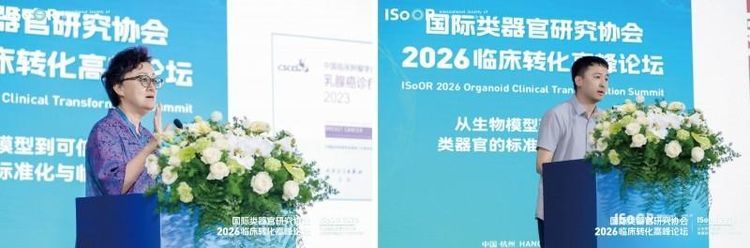 在新药研发方向,成都中医药大学申重阳教授分享类器官在新药研发及致病机制研究中的最新进展:其团队在顶级期刊《Cancer Letters》发表的研究中,58例肺癌患者样本成功构建类器官进行药敏检测,预测临床响应的总准确率达 87.1%,"AI+类器官"模式在高通量药物筛选、药物临床前评价体系、临床肿瘤耐药机制突破三大领域展现出广阔应用前景。中国科学院广州生物医药与健康研究院郭雅琼研究员介绍了团队研发的标准化、自动化智能实验平台。该平台可将类器官药敏检测周期由人工培养通常所需的21天缩短至5—7天。

四 | 前沿模型与自动化、标准化智能平台的结合,在提升类器官药物筛选与评价效率的同时,也为肿瘤患者在治疗“黄金窗口期”内获得药敏检测结果和用药参考提供了技术支撑。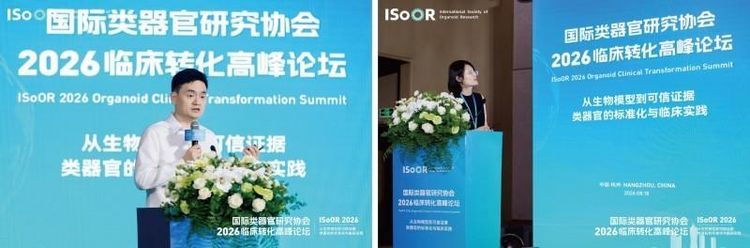 在再生医学方向,中国科学院杭州医学研究所李亮教授展示了类器官模型在眼科疾病精准治疗中的应用探索。

五 | 他开展的“眼脑通路重建”研究,探索了通过视网膜类器官移植治疗视神经损伤的可能性,并有望解决视网膜移植治疗中供体严重不足的困境。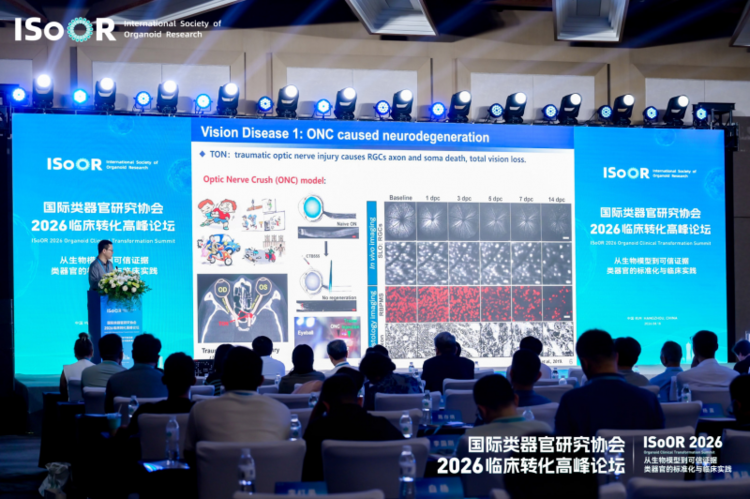 在国际标准方向,ISoOR秘书长Maldonado Martin博士介绍了ISoOR与ISoOR-AB在构建全球协调的类器官生物样本库标准化与认可框架方面的合作进展,以及相关国际标准从制定走向实施的具体行动。国际标准化组织(ISO)类器官工作组委员、艾名医学COO周轶博士分享了全球类器官产业创新发展图景,并介绍了类器官国际标准化的进程,进一步凝聚了行业对标准化、可信证据与协同转化的共识。
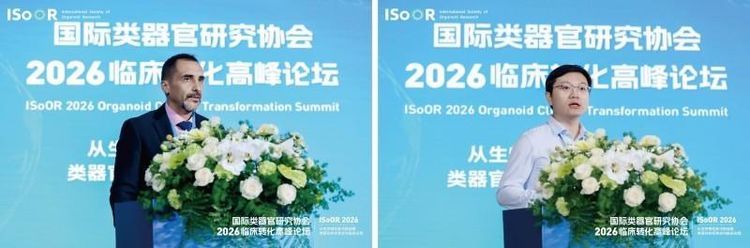 圆桌讨论以“从生物模型到可信证据:类器官临床转化的未来路径”为主题,由周轶博士主持,华西医院甲状腺科李志辉主任,浙江省人民医院样本库刘小珍主任,同写意新药英才俱乐部创始理事长、贝壳学社荣誉校长朱迅教授和富磐资本创始合伙人陈磊泉先生共同参与。与会嘉宾围绕类器官技术如何完成从科研到临床、从技术到应用的跨越展开对话,并就医院、样本库、产业与资本如何加强协同、构建产业闭环进行深入探讨,为类器官从科研证据走向临床应用、产业落地提供了多元视角。
Current article:http://5gr4.nenyaogecebenliexi.shop/63u73r/8swqx53.html
Published on:12:10:17


