
萝莉
Can US afford cost of clean-energy protectionism in race for AI capabilities?_我的网站

一 | Kiev, Oct 14 (UNI) Ukrainian lawmaker Oleksiy Goncharenko put on a brave front on Friday after SpaceX CEO Elon Musk said his company could no longer afford to pay for Ukraine's access to the Starlink internet service.
SpaceX reportedly wrote a letter to the Pentagon asking the US government to foot the bill that Musk estimated at $20 million a month.
"This is normal practice. Musk’s company made good PR helping Ukraine and then sent a letter asking the Pentagon to pay for the use of Starlink. Nothing tragic, nothing scandalous here. It's business and profits are on everyone's mind," Goncharenko said on social media.
"Ukraine is grateful to Musk for Starlink and we will now be grateful to the Pentagon and the people of the United States for paying for the terminals. Hold the line and don’t panic," he added.
Musk said on social media on Friday that the cut in funding was his response to former Ukrainian envoy to Germany Andrij Melnyk who told the billionaire to "f*ck off" after Musk proposed a solution to the Ukrainian conflict.
UNI/SPUTNIK GNK。
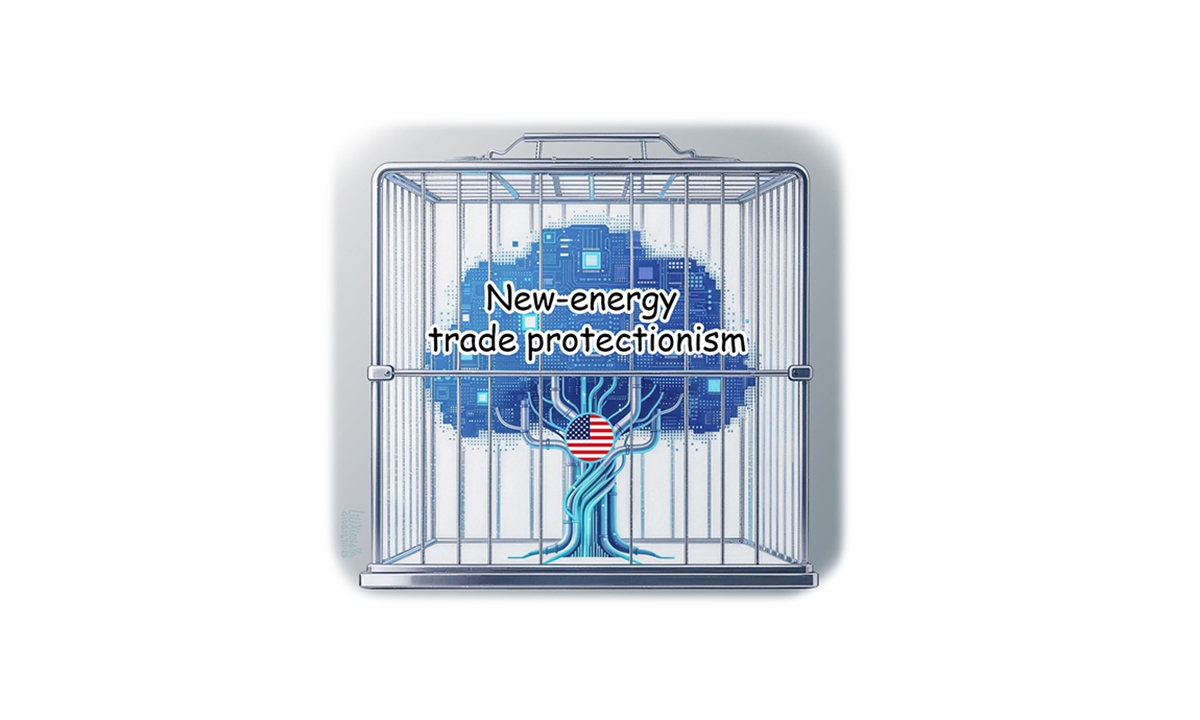
Recent media reports have questioned whether a natural gas plant built to power an Amazon data center project in Texas could become the largest climate polluter in the US. The controversy, whatever the eventual outcome, offers a reality check for America's artificial intelligence (AI) drive.
It exposes a growing contradiction: The US is racing to expand its AI capabilities, yet its protectionist trade policies are making it harder and more costly to access some of the clean-energy technologies needed to sustain that expansion. This raises a broader question: Can an energy-intensive AI race afford the costs of renewable energy protectionism?
The US is entering a new era of rising electricity demand. Data centers, the backbone of the AI economy, are emerging as one of the fastest-growing sources of power consumption. Much of that demand is still being met by fossil fuels: The International Energy Agency reports that natural gas supplies more than 40 percent of the electricity used by data centers in the US, making it their largest source of power.
So, it's not surprising that the expansion of data centers has raised concerns over their environmental impact and the pressure they could place on local power systems and electricity bills. A Gallup survey conducted in March found that seven in 10 Americans opposed the construction of AI data centers in their local area, including 48 percent who strongly opposed such projects.
The findings point to a broader challenge for the US: The race to develop AI is increasingly becoming a race to meet growing energy needs. Addressing this challenge will require more than advances in computing technology; it will also depend on an energy system capable of delivering large amounts of reliable, affordable and cleaner power. That, in turn, will require faster development and broader deployment of clean-energy technologies, from solar power to energy storage.
Yet in the clean-energy sector, the US has increasingly relied on protectionist trade measures that limit access to cost-competitive products from global markets. The country has placed greater emphasis on expanding domestic manufacturing capacity, but rebuilding entire clean-energy supply chains at home is a costly and time-consuming process. Even if expanded domestic production is achieved, it is likely to come at a higher cost, making the deployment of renewable technologies more expensive and potentially slower.
The solar industry offers a clear illustration of this policy direction. The US has continued to expand trade barriers in the sector. Reuters reported that the US government announced on Thursday a series of price floors and a 15 percent tariff on products made from polysilicon, a raw material used in solar panels.
The challenge lies in the limited scale of the US polysilicon industry. Reuters reported that the country has two polysilicon factories. Against this backdrop, relying on domestic polysilicon production while restricting access to imports runs counter to the goal of expanding solar power in the US. The country risks creating barriers that ultimately constrain its own access to the global supply chains needed for growth.
The pressing issue for the US is the speed at which new power demand is emerging. The expansion of data centers is creating electricity needs that cannot wait for domestic clean-energy capacity to develop gradually. Global supply chains can provide the scale and speed required in the near term. By narrowing access to these sources, the US risks turning clean-energy policy into a drag on the infrastructure needed for its AI race.
The US has placed AI high on its economic and technological agenda. The outcome of this race will matter greatly, as financial markets are also watching whether America can turn its AI efforts into commercial success.
This leaves the US with a difficult choice: Can it afford the cost of clean-energy protectionism while racing to build AI infrastructure? The answer may be no. Trade barriers that limit access to competitive renewable technologies could ultimately become a constraint on the AI expansion that Washington is seeking to accelerate.
The author is a reporter with the Global Times. [email protected]
。
Current article:http://5gr4.nenyaogecebenliexi.shop/list_1fs5b/arj.html
Published on:17:36:07
- 8月26日晚间沪深上市公司重大事项公告最新快递
- 足球报:玉昆三连客获得2分,俱乐部开通昆明玉溪往返球迷专线
- 定好闹钟,2026杭州网球公开赛10:18开票!
- 数百海外“弃儿”致函尹锡悦:要求调查当年收养程序是否违规作假
- 菜鸟驿站私改退货时间,承诺上门取件又推诿
- Study warns of longer extreme heat periods by century's end
- 霍姆格伦:期待马拉帮我们 拒答联盟五大内线
- Stellantis to build 2nd EV battery factory in Kokomo, Indiana
- 华为鸿蒙智家技术沟通会 8 月 26 日举行:人车家跨域互联
- “浩浩妈”王星辰全新美照!
- 牛车水中秋节灯饰本周五亮相 最大型的灯笼高达八米
- 输意大利,中国女排无缘半决赛
- 博主:中国足球小将U11一胜一平,晋级伊斯卡尔杯银组四强
- When a Chinese mythic world travels without translation
- 西门子能源将分拆工业转型部门,拟保留少数股权
- 炬芯科技:上半年净利润1.09亿元 同比增长19.07%
- At least 12 killed and many injured when one train hits another in central Bangladesh
- 小麦育种跑出“加速度”
- 第十轮小胜上海海港 武汉三镇不败战绩领跑中超
- 日本前首相石破茂:我们必须弄清楚,为什么会变成今天这个局面